
Industries
With a deep understanding of local conditions, we tackle complex issues from multiple perspectives to deliver innovative solutions
Industries
Energy
Providing advice and forecasts in the area of energy sector investment

We provide expert advice on energy. Principal economics are experts in the field of energy economics with experience in developing and adopting economic models assessing energy issues in New Zealand.
Environment
Fundamental uncertainty in the future climate requires new ways of planning

We offer a comprehensive range of services to support our clients in navigating the complex landscape of climate change and environmental issues. Our team of experts are experienced in conducting literature reviews, policy assessments, and decision making under conditions of fundamental uncertainty
Health
Housing
Housing depends on a range of factors, including affordability, location of jobs and preferences

Our team at Principal Economics encompass a unique combination of knowledge, experience, and skills suited for solving spatial and urban development and housing issues.
Infrastructure
Robust economic frameworks and empirical methods, informed by evidence, shaped in collaboration with stakeholders.

We assist our clients in identifying the primary and secondary impacts of infrastructure investments.
Tourism
Valuing the direct and indirect benefits and costs of tourism

We have used different data sets alongside with our tourism modelling capabilities for evaluating the impact of a range of investments and policy initiatives in the tourism sector.
Regulatory Economics
Transport
Accessibility is the potential for interaction with locations dispersed over space
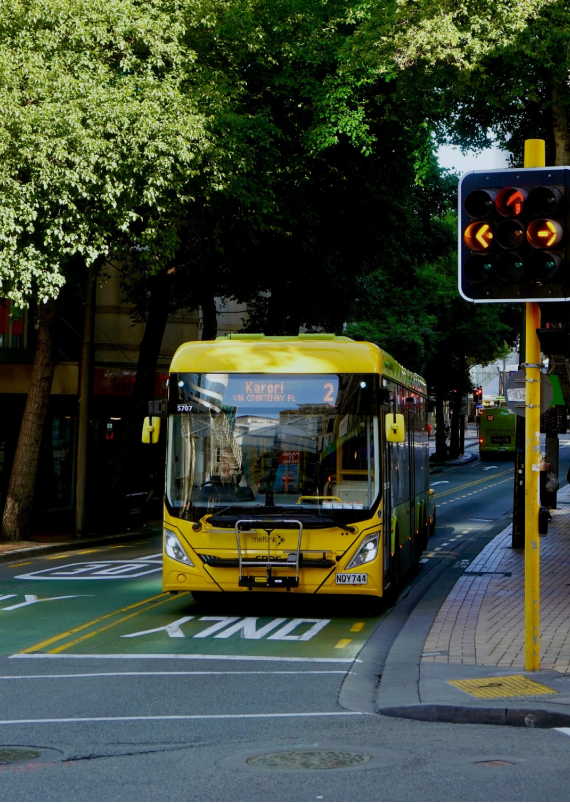
Our team currently lead some of the most important transport policy topics. This includes providing expert advice on transport equity, emission reduction policies and decision making under deep uncertainty.
Capabilities
Our innovative solutions are tailored carefully to the questions at hand
Capabilities
Economic impact analysis

Making decisions in uncertain times needs precise understanding of the costs and benefits. We can assist by identifying fiscal, economic and wellbeing benefits from your investment decision or policy intervention.
Economic research

Making decisions in uncertain times needs precise understanding of the costs and benefits. We can assist by identifying fiscal, economic and wellbeing benefits from your investment decision or policy intervention.
Market analysis

Making decisions in uncertain times needs precise understanding of the costs and benefits. We can assist by identifying fiscal, economic and social benefits from your investment decision or policy intervention.
Macroeconomic consulting

In the rapidly changing global economy, it is increasingly essential to have a comprehensive understanding of macroeconomic dynamics and conduct a robust analysis of the economic environment to make informed strategic decisions.
Cost benefit analysis

Making decisions in uncertain times needs precise understanding of the costs and benefits. We can assist by identifying fiscal, economic and wellbeing benefits from your investment decision or policy intervention.
Forecasting and modelling

Making decisions in uncertain times needs precise understanding of the costs and benefits. We can assist by identifying fiscal, economic and wellbeing benefits from your investment decision or policy intervention.
Spatial analysis and modelling
In the rapidly changing global economy, it is increasingly essential to have a comprehensive understanding of macroeconomic dynamics and conduct a robust analysis of the economic environment to make informed strategic decisions.
Business case approach

Our team have led business cases for a range of sensitive topics.
About Us
Our consultancy services are driven by the questions of clients, informed by robust evidence, shaped in collaboration with stakeholders, rooted in multi-deciplinary approaches and guided by principles of Economics. Our company is a Tier 2 AOG consultant.
About Us
Our purpose, mission and values

We exist to strengthen economic decision-making in complex systems. Grounded in economic theory and rigorous analytical practice, we apply advanced modelling and disciplined strategic reasoning to support institutions facing high-stakes choices. We integrate emerging analytical tools, including artificial intelligence, where they enhance clarity and evidence — not as substitutes for judgement, but as instruments of deeper economic insight.
Our Corporate Commitments

At Principal Economics, we are dedicated to making a positive impact on society and delivering value to our clients through our unwavering commitment to excellence and responsible business practices. As an economics consulting firm, we recognize the importance of addressing the pressing challenges of our time and striving for inclusive growth, community engagement, diversity and inclusion, ethics and integrity, health and safety, as well as sustainability.
How We Work
Exceptional People and Culture
At Principal Economics, our approach to work is driven by a commitment to excellence, collaboration, and client-centricity. We leverage our expertise, draw inspiration from industry-leading organisations, and continuously refine our practices to ensure we deliver exceptional results. Here's an overview of how we work:

Publications
Our reports offer inspiring and independent insights into various topical issues
Knowledge Hub
Here we provide frontier knowledge and data collected from our latest reports and analyses
Articles
Our articles challenge the status quo by reframing current issues, sparking fresh conversations and finding new solutions
Tools
Artificial Intelligence, Economic and Policy Toolkits
Publications
Knowledge Hub
Articles
Tools
Economic Impact of New Zealand's Second Emission Reduction Plan
CGE modelling of ERP2

This report uses CGE modelling to estimate GDP, employment and distributional impacts of the Emissions Reduction Plan 2 (ERP2), which delineates Aotearoa New Zealand's strategy to attain its emissions reduction objectives for the 2026-2030 period, alongside setting a path towards achieving long-term emissions reduction objectives.
Climate change adaptation and investment decision making

Aotearoa New Zealand suffers from an infrastructure deficit. Without the key infrastructure needed now for our economy to thrive, we deprive future generations from significant economic prosperity.
Review of Housing and Business Development Capacity Assessments

The Ministry for the Environment (MfE) appointed Principal Economics to review the Housing and Business Development Capacity Assessments HBAs). Our review included all councils’ HBAs, except for Rotorua and Wellington, which were not available at the time of this review.
Incorporating distributional impacts (equity) into the CBA framework

Transportation decisions can have large and varied impacts on travellers and their communities. It’s important to measure these effects and consider their impact on various groups when planning projects.
Business Development Capacity Assessment for Dunedin City

Dunedin City Council appointed Principal Economics to provide a comprehensive assessment of the sufficiency in development capacity of business land within Dunedin to fulfils requirements of the the National Policy Statement on Urban Development
See all Publications
Read inspiring publications that challenge conventional thinking by reframing current issues, igniting fresh conversations, and discovering innovative solutions.
Database of road transport elasticities
Emission reduction initiatives

We provide a comprehensive summary of potential policy areas suitable for emissions reduction. This inludes a review of policy areas including active transport, mobility as a service, ridesharing, telework, parking pricing, road user pricing, carbon taxes and more.
VKT Dashboard
This household and regional VKT dashboard showcases the power of using frontier data manipulation methods and granular IDI data
Drivers of House Price Growth

We provide an extensive review and test the factors of housing price growth in New Zealand. We assessed the level of agreement and certainty with the source of house price growth over the last fifty years.
See All Knowledge Hub
SURF
Shaping New Zealand’s Health Adaptation Strategy
Transport equity
See All Articles
Contact Us
Our team
Chief Executive Officer

Eilya is the CEO of Principal Economics with extensive executive and consultancy experience.
Chris Parker

Chris Parker is a leading applied economist and policy advisor with deep expertise in urban economics, infrastructure, and cost-benefit appraisal.
Our Team

Our team integrates economic theory, advanced modelling, and disciplined strategic reasoning to support consequential decisions. We operate across infrastructure, energy systems, climate transition, and regulatory economics.
NZ Households Face $4,000–$6,000 Hit if Fuel Prices Stay Elevated
Dr Eilya Torshizian
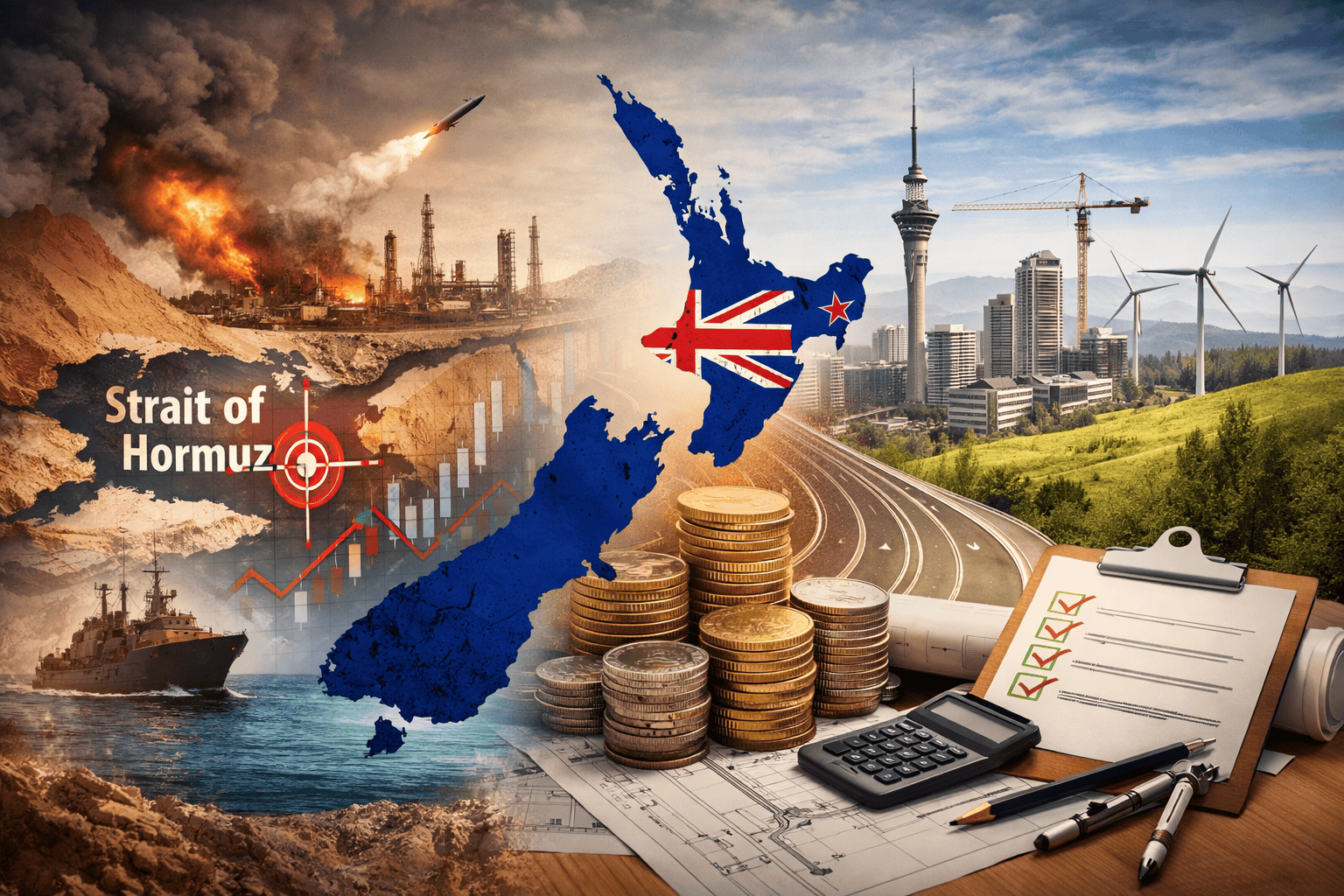
The escalation of conflict in the Middle East, and the associated risks to shipping through the Strait of Hormuz, have renewed concerns about New Zealand’s exposure to global fuel supply disruptions. As discussed in our earlier analysis, the Strait remains a critical chokepoint for global oil flows. Even partial disruption can transmit rapidly into domestic fuel prices, given New Zealand’s reliance on imported refined fuels. Since the onset of hostilities on 28 February, domestic fuel prices have risen from approximately $2.65 per litre to $3.32 as of 23 March—an increase of 67 cents. This raises an immediate policy question: what is the economic cost of such an increase, and how persistent might these effects be?
The duration of the conflict remains highly uncertain. Historical experience suggests that conflicts expected to resolve quickly can persist far longer than anticipated, while repeated signals of de-escalation often prove temporary. The risk is not limited to shipping disruption alone. If refining infrastructure in the Middle East were to be damaged, supply constraints could become more structural, prolonging elevated fuel prices well beyond the immediate conflict period. Under such a scenario, New Zealand would face sustained cost pressures rather than a short-lived price spike.
In earlier peer-reviewed work, we were commissioned to estimate the economic impacts of transport pricing using our static subregional CGE model (PE-CGE). This model represents 88 areas across New Zealand, drawing on a detailed database covering 67 territorial authorities and 21 Auckland local board areas. The key advantage of this regional CGE framework, relative to a national model, lies in its ability to capture spatial heterogeneity—allowing us to assess how region-specific shocks propagate across the economy. The PE-CGE model adopts a bottom-up structure, linking independently specified regional economies through trade and primary factor markets. Prices and quantities are determined separately within each region, enabling a detailed representation of cross-regional interactions and spillovers into national outcomes.
While the full results of that work are not yet public, the model provides a robust basis for scaling the economic implications of fuel price changes. Applying these relationships suggests that a 1 cent increase in fuel prices reduces New Zealand’s economic output by approximately $49 million to $78 million per year, with a central estimate of around $56 million. Extending that relationship to the observed 67 cent increase implies substantial economywide impacts, as summarised below.
Estimated annual economic impact of current fuel price increase (67 cents)
| Region | Lower bound ($m) | Central estimate ($m) | Upper bound ($m) |
|---|---|---|---|
| Auckland | -2,480 | -2,830 | -4,030 |
| Wellington | -185 | -220 | -315 |
| Christchurch | -600 | -660 | -920 |
| Rest of New Zealand | -4,335 | -4,990 | -6,935 |
| New Zealand | -7,600 | -8,700 | -12,200 |
These estimates indicate that the current fuel price increase is associated with an annual economic cost of approximately $8.7 billion, with a plausible range of $7.6 billion to $12.2 billion. Importantly, these figures reflect real economic losses—reductions in productive efficiency and purchasing power—rather than fiscal transfers. Environmental benefits arising from reduced emissions and transport demand may offset part of these costs. Based on earlier analysis, such benefits could plausibly account for around 20% to 25% of the total economic loss, reducing the net welfare impact but not eliminating it.
Current indications suggest the conflict will persist for at least several more weeks, raising the likelihood that elevated fuel prices will continue. At current levels, the associated economic cost is estimated at approximately $8.7 billion per year, with a plausible range of $7.6 billion to $12.2 billion. This is equivalent to around 2% of New Zealand’s GDP, or roughly $4,000 to $6,000 per household annually. This per-household figure assumes that current fuel prices are sustained for a full year; if prices ease sooner, the realised impact would be proportionally smaller. It is also important to note that these estimates capture not only direct financial costs—such as higher fuel and transport expenses—but also indirect economic losses. These include forgone opportunities where businesses defer investment, reduce production, or scale back expansion because higher operating costs make some activities uneconomic. Households may also reduce discretionary spending, which weakens demand in sectors such as retail, hospitality, and services. Even allowing for environmental benefits—potentially offsetting 20% to 25% of these losses—the net impact remains significant, particularly if disruptions to global fuel supply persist.
So what does this mean for policy?
The central value of these estimates is that they quantify the economic cost of fuel price shocks, turning an abstract risk into a measurable trade-off. An estimated loss of around $8 billion to $9 billion per year provides a benchmark against which policymakers can assess whether intervention is warranted. For example, if mitigation measures—such as temporary tax relief, support packages, or strategic fuel management—can materially reduce this loss at a lower cost, then intervention may be justified. Without such estimates, it is difficult to determine when action is proportionate or efficient.
These results are also directly relevant for energy security and contingency planning. Even if current policies focus primarily on households, understanding the economywide cost helps identify where constraints would be most damaging if the situation escalates. In more severe scenarios, this information becomes critical for designing targeted responses—whether through prioritising essential services, maintaining freight and supply chains, or avoiding blunt restrictions that impose unnecessary economic costs. In parallel, the magnitude of the estimated losses strengthens the case for longer-term resilience investments, including reducing fuel dependence and improving transport efficiency.
Finally, the estimates provide a practical tool for forward planning across government, businesses, and households. For policymakers, they inform fiscal and monetary responses to a large external shock. For businesses, they indicate the scale of potential disruption and support decisions around investment, pricing, staffing, and supply-chain management. For households, they clarify that the impact extends beyond the petrol pump to broader economic conditions, including prices, wages, and employment. In this sense, the estimates are not merely descriptive; they help align expectations and guide a more coordinated response to a potentially persistent shock.