
Industries
With a deep understanding of local conditions, we tackle complex issues from multiple perspectives to deliver innovative solutions
Industries
Energy
Providing advice and forecasts in the area of energy sector investment

We provide expert advice on energy. Principal economics are experts in the field of energy economics with experience in developing and adopting economic models assessing energy issues in New Zealand.
Environment
Fundamental uncertainty in the future climate requires new ways of planning

We offer a comprehensive range of services to support our clients in navigating the complex landscape of climate change and environmental issues. Our team of experts are experienced in conducting literature reviews, policy assessments, and decision making under conditions of fundamental uncertainty
Health
Housing
Housing depends on a range of factors, including affordability, location of jobs and preferences

Our team at Principal Economics encompass a unique combination of knowledge, experience, and skills suited for solving spatial and urban development and housing issues.
Infrastructure
Robust economic frameworks and empirical methods, informed by evidence, shaped in collaboration with stakeholders.

We assist our clients in identifying the primary and secondary impacts of infrastructure investments.
Tourism
Valuing the direct and indirect benefits and costs of tourism

We have used different data sets alongside with our tourism modelling capabilities for evaluating the impact of a range of investments and policy initiatives in the tourism sector.
Regulatory Economics
Transport
Accessibility is the potential for interaction with locations dispersed over space

Our team currently lead some of the most important transport policy topics. This includes providing expert advice on transport equity, emission reduction policies and decision making under deep uncertainty.
Capabilities
Our innovative solutions are tailored carefully to the questions at hand
Capabilities
Economic impact analysis

Making decisions in uncertain times needs precise understanding of the costs and benefits. We can assist by identifying fiscal, economic and wellbeing benefits from your investment decision or policy intervention.
Economic research

Making decisions in uncertain times needs precise understanding of the costs and benefits. We can assist by identifying fiscal, economic and wellbeing benefits from your investment decision or policy intervention.
Market analysis

Making decisions in uncertain times needs precise understanding of the costs and benefits. We can assist by identifying fiscal, economic and social benefits from your investment decision or policy intervention.
Macroeconomic consulting

In the rapidly changing global economy, it is increasingly essential to have a comprehensive understanding of macroeconomic dynamics and conduct a robust analysis of the economic environment to make informed strategic decisions.
Cost benefit analysis

Making decisions in uncertain times needs precise understanding of the costs and benefits. We can assist by identifying fiscal, economic and wellbeing benefits from your investment decision or policy intervention.
Forecasting and modelling

Making decisions in uncertain times needs precise understanding of the costs and benefits. We can assist by identifying fiscal, economic and wellbeing benefits from your investment decision or policy intervention.
Spatial analysis and modelling
In the rapidly changing global economy, it is increasingly essential to have a comprehensive understanding of macroeconomic dynamics and conduct a robust analysis of the economic environment to make informed strategic decisions.
Business case approach

Our team have led business cases for a range of sensitive topics.
About Us
Our consultancy services are driven by the questions of clients, informed by robust evidence, shaped in collaboration with stakeholders, rooted in multi-deciplinary approaches and guided by principles of Economics. Our company is a Tier 2 AOG consultant.
About Us
Our purpose, mission and values

Our purpose, mission, and values guide our actions and aspirations. We are dedicated to driving positive change, delivering innovative solutions, and upholding the highest standards of professionalism. By adhering to these principles, we aim to make a lasting impact and contribute to the betterment of society.
Our Corporate Commitments

At Principal Economics, we are dedicated to making a positive impact on society and delivering value to our clients through our unwavering commitment to excellence and responsible business practices. As an economics consulting firm, we recognize the importance of addressing the pressing challenges of our time and striving for inclusive growth, community engagement, diversity and inclusion, ethics and integrity, health and safety, as well as sustainability.
How We Work
Exceptional People and Culture

At Principal Economics, our approach to work is driven by a commitment to excellence, collaboration, and client-centricity. We leverage our expertise, draw inspiration from industry-leading organisations, and continuously refine our practices to ensure we deliver exceptional results. Here's an overview of how we work:

Publications
Our reports offer inspiring and independent insights into various topical issues
Knowledge Hub
Here we provide frontier knowledge and data collected from our latest reports and analyses
Articles
Our articles challenge the status quo by reframing current issues, sparking fresh conversations and finding new solutions
Publications
Knowledge Hub
Articles
Tools
- 404
- About us
- Acronyms
- All Publications
- Article
- Business case approach
- Careers
- Careers Single
- CGE
- Contact
- Contents
- Cost benefit analysis
- Database of road transport elasticities
- Discussion-and-future-research
- Dr Eilya Torshizian
- Economic impact analysis
- Economic research
- Emission reduction initiatives
- Active Transport
- Car use restrictions
- Carsharing Services
- Commute trips reduction (CTR) programs.
- Complete street policies
- Congestion pricing
- Distance-based vehicle pricing
- Efficient Parking Pricing
- Emission reduction introduction
- Increased fuel and carbon tax for road vehicles
- Land use development trip reduction planning
- Mobility as a Service
- Mobility hubs
- Mobility Management
- Public Transport Services
- Reduced Public Transport fares
- Ridesharing
- Road Space Reallocation
- Road user pricing
- School Transport Management
- Taxi and ride-hailing
- Telework
- Tourist and special event transport management
- Transit Oriented Development and Urban Village Planning
- Transportation Management Associations
- Vehicle Travel / Speed Restriction Areas
- Emission reduction prefance
- Energy
- Environment
- Eugene Isack
- Executive-summary
- Forecasting and modelling
- Gambling Harm Strategies: Why It Matters for Social Welfare and Equity
- GHG
- google_analytics
- Health
- Housing
- Housing Affordability
- How We Work
- Impact-of-the-factors-of-demand
- Impact-of-the-factors-of-supply
- Infrastructure
- Insights
- Knowledge Hubs
- Macroeconomic consulting
- Market analysis
- Menu
- Our Corporate Commitments
- Our purpose, mission and values
- Our Team
- Preface
- Principal Economics – World-class, Client-driven Research and Strategy
- Principal Economics – World-class, Client-driven Research and Strategy
- Principal Economics Canada
- Publications
- Publications Single
- References
- Regulatory Economics
- Spatial analysis and modelling
- SURF
- Test 2
- The list of-keywords and the reviewed literature
- Tourism
- Transport
- World-class, Client-driven Research and Strategy – Principal Economics Canada
Economic Impact of New Zealand's Second Emission Reduction Plan
CGE modelling of ERP2

This report uses CGE modelling to estimate GDP, employment and distributional impacts of the Emissions Reduction Plan 2 (ERP2), which delineates Aotearoa New Zealand's strategy to attain its emissions reduction objectives for the 2026-2030 period, alongside setting a path towards achieving long-term emissions reduction objectives.
Climate change adaptation and investment decision making

Aotearoa New Zealand suffers from an infrastructure deficit. Without the key infrastructure needed now for our economy to thrive, we deprive future generations from significant economic prosperity.
Review of Housing and Business Development Capacity Assessments

The Ministry for the Environment (MfE) appointed Principal Economics to review the Housing and Business Development Capacity Assessments HBAs). Our review included all councils’ HBAs, except for Rotorua and Wellington, which were not available at the time of this review.
Incorporating distributional impacts (equity) into the CBA framework

Transportation decisions can have large and varied impacts on travellers and their communities. It’s important to measure these effects and consider their impact on various groups when planning projects.
Business Development Capacity Assessment for Dunedin City

Dunedin City Council appointed Principal Economics to provide a comprehensive assessment of the sufficiency in development capacity of business land within Dunedin to fulfils requirements of the the National Policy Statement on Urban Development
See all Publications
Read inspiring publications that challenge conventional thinking by reframing current issues, igniting fresh conversations, and discovering innovative solutions.
Database of road transport elasticities
Emission reduction initiatives
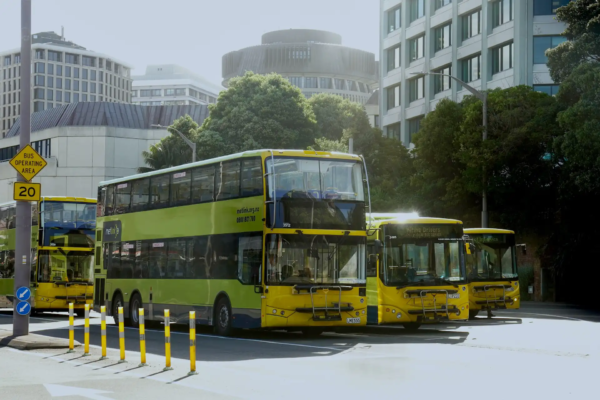
We provide a comprehensive summary of potential policy areas suitable for emissions reduction. This inludes a review of policy areas including active transport, mobility as a service, ridesharing, telework, parking pricing, road user pricing, carbon taxes and more.
VKT Dashboard
This household and regional VKT dashboard showcases the power of using frontier data manipulation methods and granular IDI data
Drivers of House Price Growth

We provide an extensive review and test the factors of housing price growth in New Zealand. We assessed the level of agreement and certainty with the source of house price growth over the last fifty years.
See All Knowledge Hub
SURF
Transport equity
See All Articles
Contact Us
Our team
Chief Executive Officer

Eilya is the CEO of Principal Economics with extensive executive and consultancy experience. Eilya is experienced in managing large teams of applied researchers and has led a wide range of high-profile infrastructure projects.
Chris Parker

Chris Parker is a leading applied economist and policy advisor with deep expertise in urban economics, infrastructure, and cost-benefit appraisal.
Eugene Isack

Eugene has over a decade experience in the economics and planning consulting and is experienced in data analysis and transport and economic modelling, with specialised skills in geographic information systems (GIS), big data analysis, and is a registered Statistics IDI researcher.
Alina Fehling

Alina is experienced in data analysis and is interested in welfare, inequality and trade topics.
Ruyi Jia

Ruyi is specialised in economic modelling and data analysis, with a keen interest in advancing the energy sector in New Zealand.
Phil Donovan

Phil has over a decade consulting experience in the areas of transport, planning and economics. He is experienced in data analysis and a range of modelling, with specialised skills in programming and reproducible analysis with tools such as R, Python, SQL, Git(Hub), Docker, big data.
Emily Hendy

Emily is a skilled economist with expertise in statistical analysis, data interpretation, and reporting.
Climate Policy, Trade, and Growth—What Changes and Who Pays

Dr Eilya Torshizian
We applied our economy–energy–emissions framework to a national emissions budget, showing how targets translate into sector outcomes, investment, prices, and equity—an approach useful for Canada's federal, provincial, and municipal decisions.
This summary highlights what a full emissions-budget analysis can deliver: credible forecasts of emissions by sector and technology, economy-wide impacts (GDP, jobs, prices), investment split between compliance and capacity, and the distributional effects across households and industries. The work was recently completed for a national programme and demonstrates the same modelling capability we bring to provincial data, policies, and market linkages with the United States:
Targets to levers: Links carbon prices, benchmarks, standards, and subsidies to sector and technology outcomes.
Physical + macro outputs: Reports both physical units (e.g., MWh, bbl/day) and macro indicators, with clear attribution.
Investment & capital stock: Tracks additions, retirements, and productive capacity—what changes, when, and at what cost.
Distributional lens: Shows incidence across household groups and trade-exposed industries.
Trade realism: Captures Canada–U.S. linkages (Midwest, Gulf Coast, Pacific Northwest) so results reflect real markets.